
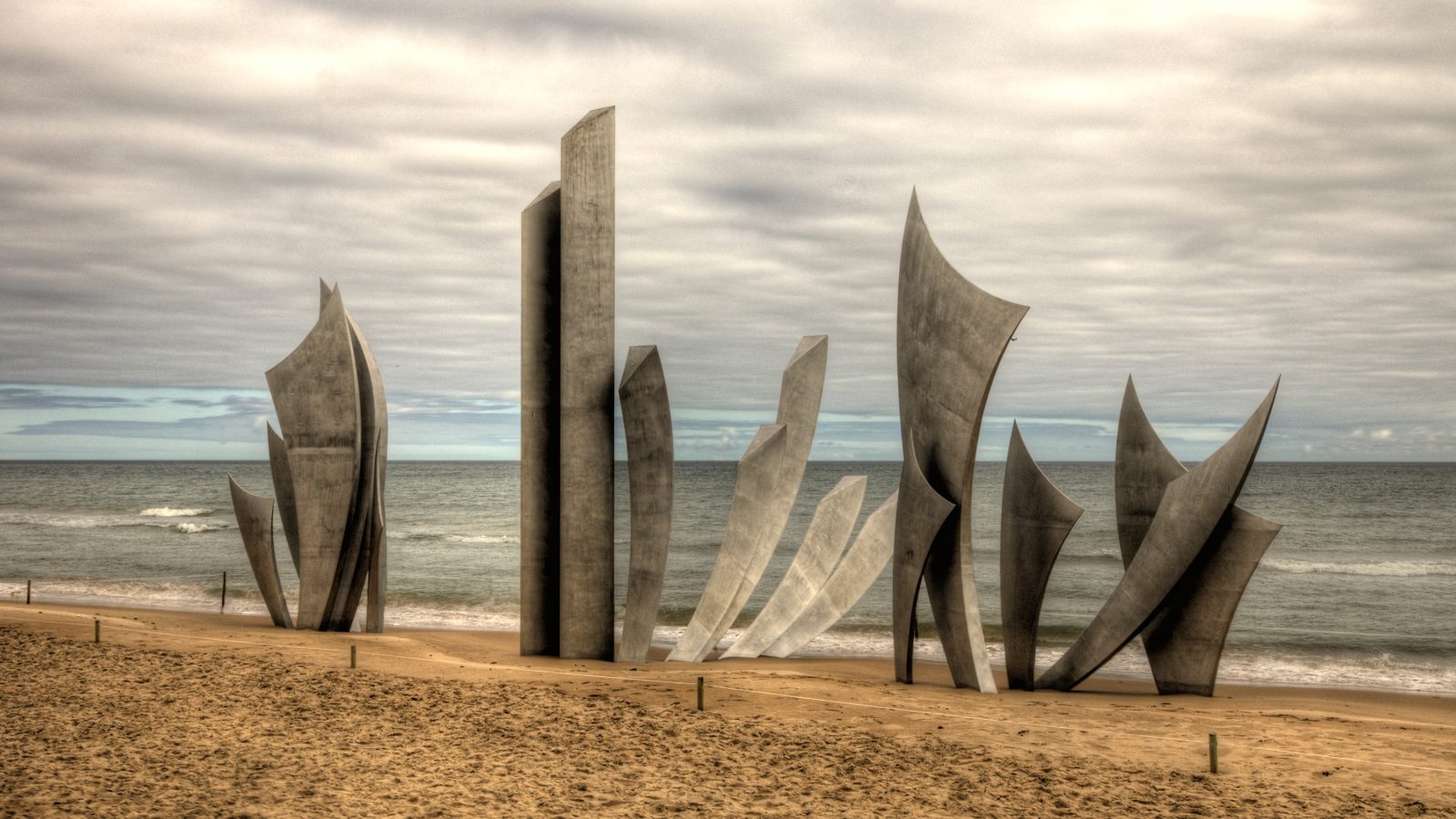
Quick answer
The beaches themselves are open 00:00–23:59 every day of the week, with entry free at 0 EUR, because the shoreline is public land rather than a gated attraction. Museums, cemeteries and bunker sites along the coast keep their own shorter hours. The recommended arrival window is 08:00–11:00, at Normandy D-Day Landing Beaches, Normandy, France.
Nothing marks the boundary. A visitor walking down onto the sand at Vierville-sur-Mer crosses from a car park into one of the most documented military landscapes on earth without passing a gate, a desk or a barrier. That single fact governs almost every decision a traveller makes about a normandy day trip from paris by train, because it means the coast has no closing bell — only the daylight, the tide, and the timetable back. The practical difficulty is scale rather than distance. Utah, Omaha, Gold, Juno and Sword stretch across a long arc of the Calvados and Manche coastline, linked by the D514 coastal road rather than by any single walking path. Paris sits close enough that the rail corridor toward Caen and Bayeux makes a same-day return realistic; what it cannot do is deliver a traveller to the sand directly. Bayeux, with its cathedral and its eleventh-century tapestry, functions as the usual hinge point — a compact town where onward transfers, guided minibuses and bicycle hire all converge. Understanding that hinge is the difference between a day that works and a day spent waiting. History here is unusually legible. The concrete casemates of the Atlantic Wall, the artificial Mulberry harbour caissons still visible offshore at Arromanches, the Normandy American Cemetery above Colleville-sur-Mer — all of it sits in the open, weathering in salt air. That legibility is why so many visitors underestimate the day. Reading the ground properly takes hours, and the memorial sites, unlike the shoreline, do lock their doors. So the answer to the question is yes, with a caveat about ambition. Two or three anchor points is an honest target for a Normandy landing beaches tour built around rail; four is a route march. Travellers wanting the coastal drive, a museum and a cemetery in one stretch should decide their priority before boarding, not on the platform at Bayeux. Anyone using this normandy day trip from paris by train guide will find the hours, transfer options and timing detail set out in the sections that follow — this page frames the choice; those pages make it bookable.
“The coast has no closing bell — only the daylight, the tide, and the timetable back.”
Normandy Day Trip From Paris by Train: opening hours for the D-Day Landing Beaches
The Normandy D-Day Landing Beaches are open every day of the week, so there is no weekday closure to plan around. As an open outdoor site, visits are not limited by a gate schedule.
| Monday | 00:00 – 23:59 | Open daily |
|---|---|---|
| Tuesday | 00:00 – 23:59 | Open daily |
| Wednesday | 00:00 – 23:59 | Open daily |
| Thursday | 00:00 – 23:59 | Open daily |
| Friday | 00:00 – 23:59 | Open daily |
| Saturday | 00:00 – 23:59 | Open daily |
| Sunday | 00:00 – 23:59 | Open daily |
How to get to the Normandy day trip from Paris by train sites
Normandy D-Day Landing Beaches sit in Normandy, France, with the easiest rail access from Paris via Caen, Bayeux, or Carentan. From those stations, you usually need a local bus, taxi, bike, or guided transfer to reach the beaches themselves.
Paris Saint-Lazare to Bayeux station on the TER / NOMAD rail network
Paris Saint-Lazare to Caen station on the TER / NOMAD rail network
Paris Saint-Lazare to Carentan station on the TER / NOMAD rail network
From Bayeux or Caen station, use a NOMAD local bus or prebooked shuttle for beach access
Best time for a Normandy day trip from Paris by train
The best window is April to October, with the most practical arrival in the morning. Normandy Tourism’s official recommendation is 08:00–11:00, which gives you the best daylight and fewer crowds for a day trip from Paris by train.
April to June
Moderate crowds10-18°C, longer daylight
Spring is a strong sweet spot for a one-day visit because you get brighter mornings without peak-summer congestion. An early start from Paris makes the most of the day and helps you arrive during the calmest part of the visit.
July to August
Heaviest crowds16-24°C, longest days
This is the busiest season, especially around school holidays, so the beaches and memorial sites feel busier through the day. If you travel now, the official 08:00–11:00 arrival window matters even more.
September to October
Fewer crowds10-20°C, soft light
Early autumn often gives the best balance of lighter visitor numbers and comfortable temperatures. It is a good time for photos and for keeping the visit efficient on a same-day rail trip.
Weekday mornings
Quietest period—
If your schedule is flexible, Tuesday to Thursday mornings are the most efficient slot. You are more likely to avoid the busiest midday flow and get more out of the limited daylight.
Verdict: Tuesday to Thursday, arriving between 08:00 and 11:00, ideally in April, May, September, or October.
Normandy Day Trip From Paris by Train: a realistic one-day itinerary
This plan suits visitors travelling from Paris without a car who want the core landing-beach sites in a single day, running roughly 14 hours door to door. It is a full day of moving, so treat the sequence as the fixed frame and swap individual stops rather than adding them.
Depart Paris Saint-Lazare
Board an early direct train toward Bayeux, allowing about 2h15 on rails plus platform time. Arriving in Paris 20 minutes ahead avoids a rushed start to a tightly sequenced day.
Collect transfer at Bayeux
Meet your pre-arranged transfer or shuttle outside Bayeux station and confirm the return pickup time before setting off. Budget 20 minutes here; nothing later in the day absorbs a missed connection.
First coastal stop
Begin at the eastern or western end of the coast rather than the middle, so the day runs in one direction. Around 90 minutes at the opening site sets a workable pace for what follows.
Midday coastal leg
The beaches sit 15 to 40 minutes apart by road, so expect real transfer time between stops. Two sites before mid-afternoon is realistic; three means seeing each one briefly.
Afternoon clifftop and battery site
Uneven ground and open paths make this the slowest walking of the day. Allow 60 to 90 minutes and wind protection, even in summer.
Return leg to Bayeux
Head back with a 45-minute buffer before your train, which covers coastal traffic and a short stop in Bayeux itself. Leave the buffer intact rather than spending it on one more site.
Train back to Paris
Late-afternoon and early-evening departures return to Saint-Lazare by mid-evening. Check the last direct service when planning, as the final workable train sets your real turnaround point on the coast.
Why the Normandy D-Day Landing Beaches matter on a Normandy day trip from Paris by train
The coast that visitors reach on a normandy day trip from paris by train was chosen for its geology. Allied planners rejected the fortified Pas-de-Calais in favour of the Calvados shelf, where gently shelving sand could carry landing craft and armour. Hitler's Directive No. 40, issued in March 1942, had ordered the Atlantic Wall built along this shore. From late 1943 Erwin Rommel accelerated the work, seeding the tideline with steel hedgehogs, stakes and roughly six million mines. Operation Overlord opened after midnight on 6 June 1944. British gliders took the Bénouville bridge over the Caen Canal within minutes; American paratroopers of the 82nd and 101st Airborne scattered inland behind the Cotentin dunes. At dawn some 7,000 vessels crossed the Channel. By nightfall around 156,000 men were ashore, and the beachhead held. Two artificial Mulberry harbours were then towed across in sections and assembled off Arromanches and Saint-Laurent; the June storm of 19–22 June destroyed one and crippled the other. The fighting did not end at the shoreline. The Battle of Normandy ran until 21 August 1944, when the Falaise Pocket closed. Caen lost some three-quarters of its buildings. That scale of loss explains why this stretch of Normandy landmarks is organised around remembrance rather than spectacle, and why the beaches were inscribed on France's UNESCO tentative list in 2018. What survives is unusually legible. Concrete casemates of the Atlantic Wall still face the sea. Bomb craters pit the clifftop at Pointe du Hoc. Rusted Mulberry caissons sit offshore at Arromanches at low tide, visible from the promenade. Anyone taking a normandy day trip from paris by train walks a working farmland coast where the 1944 landscape has been deliberately left in place.
Hitler's Directive No. 40 orders construction of the Atlantic Wall along the Normandy coast.
Erwin Rommel takes charge of coastal defences and floods low ground behind the beaches.
Operation Overlord lands roughly 156,000 Allied troops across five sectors of the Calvados coast.
A Channel storm wrecks the Mulberry harbour off Saint-Laurent and damages the one at Arromanches.
The closing of the Falaise Pocket ends the Battle of Normandy after eleven weeks of fighting.
The Normandy American Cemetery at Colleville-sur-Mer is formally dedicated above Omaha Beach.
France adds the D-Day landing beaches to its UNESCO World Heritage tentative list.
Key D-Day Landing Beaches and memorial sites to see on a Normandy day trip from Paris by train
A Normandy day trip from Paris by train usually focuses on the best-known D-Day sectors and a few major remembrance sites. If you are planning a beach-and-memorial circuit, these are the named places most visitors combine so the page’s beach references make sense.
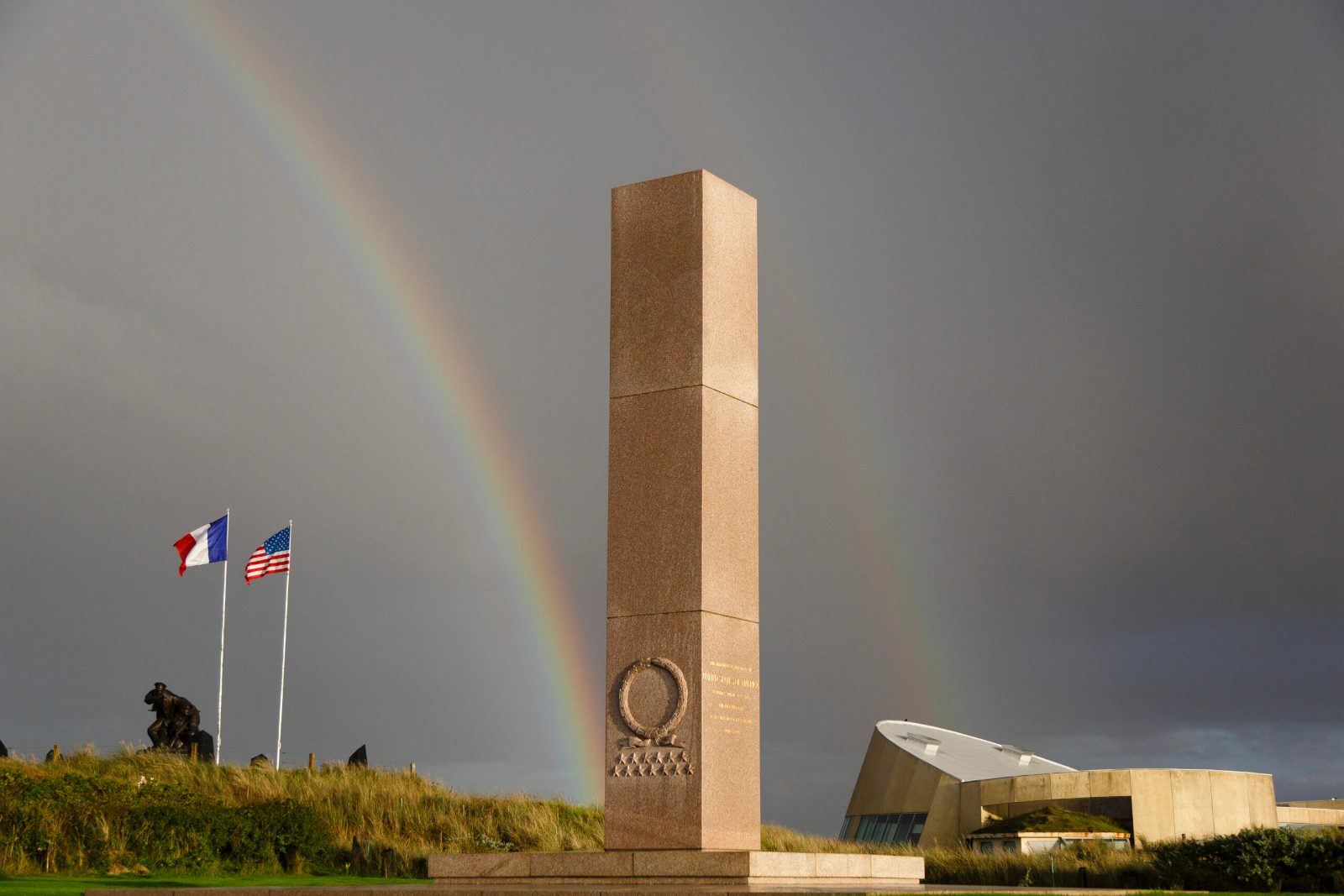
Utah Beach
The western landing sector is one of the five D-Day beaches and a common first stop for visitors tracing the American landings. It helps set the scale of the operation before moving on to nearby memorial sites and museums.
Look for the shoreline markers before walking the sand.
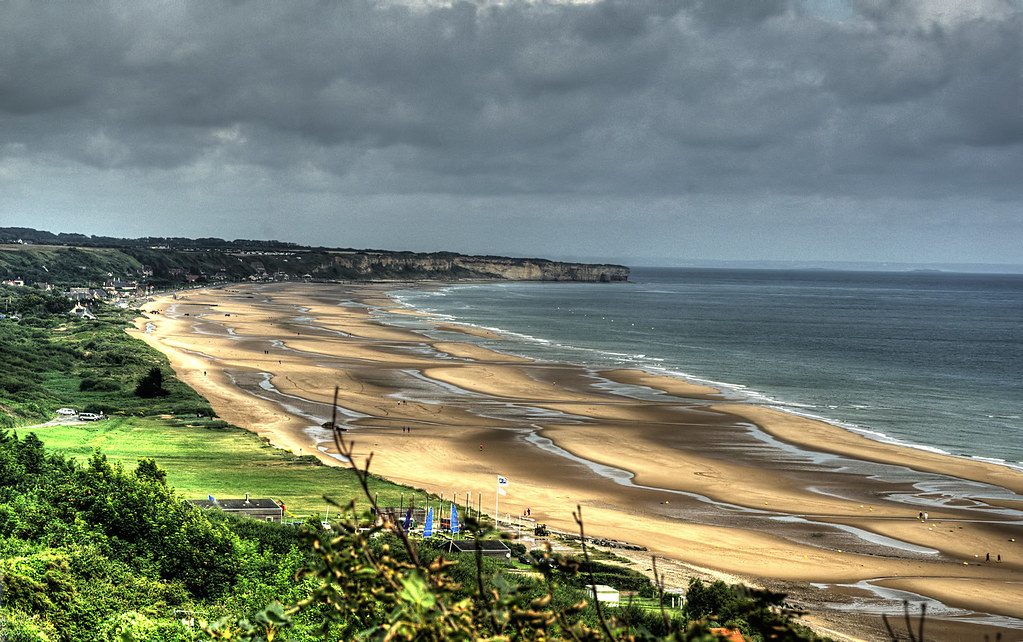
Omaha Beach
This is the most visited American landing sector, known for its wide beach and the memorial landscape above Colleville-sur-Mer. It is the place many travelers pair with the cemetery and Pointe du Hoc on the same route.
Stand back from the waterline to read the site layout.
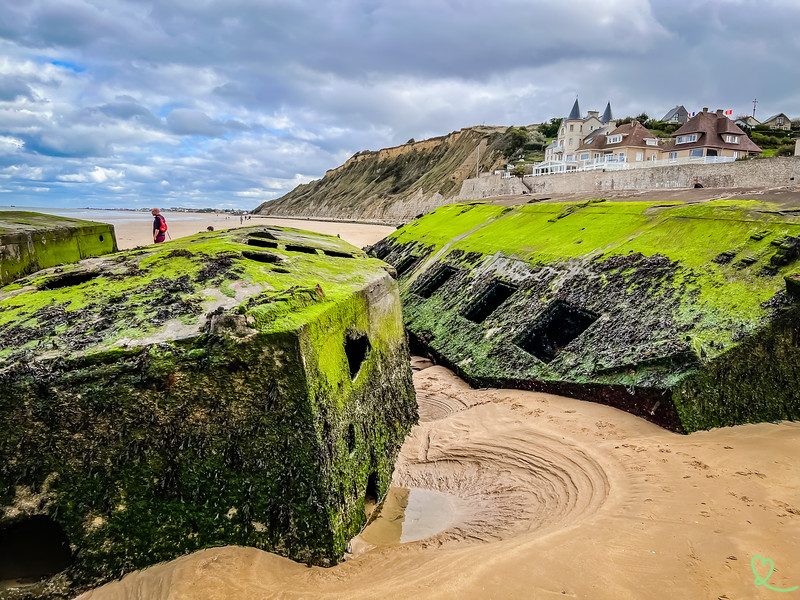
Gold Beach
Gold Beach is the British sector, stretching around Arromanches and Ver-sur-Mer, where the shoreline links directly to remembrance sites and the remains of the Mulberry harbour. It is a good stop for visitors who want both the beach and the reconstruction story in one view.
Start at Arromanches for the widest harbor panorama.
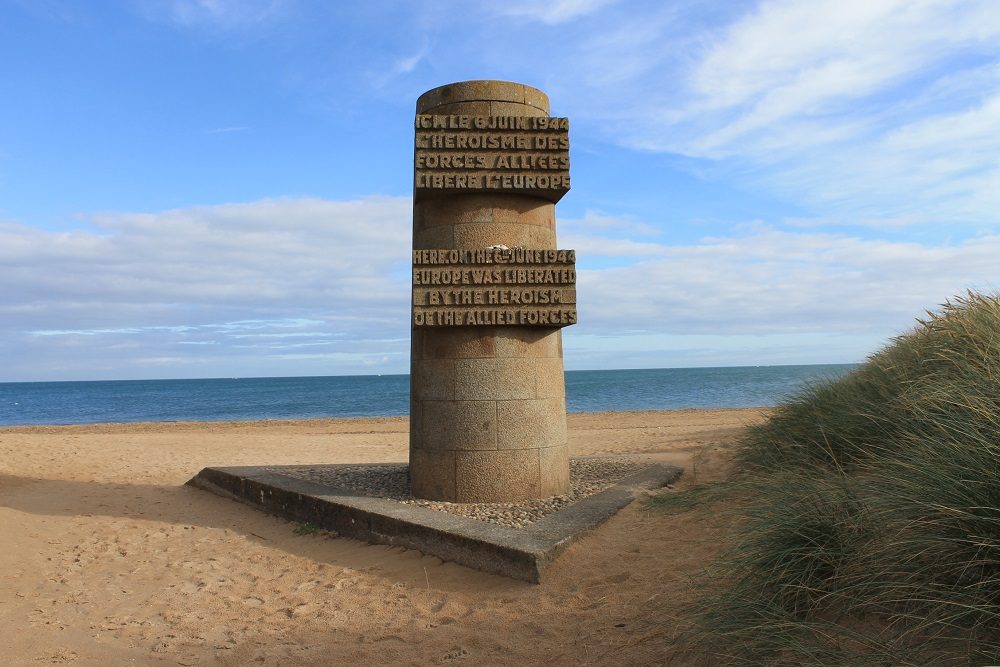
Juno Beach
This Canadian sector is one of the five landing beaches and is often linked with nearby memorial stops on the central Calvados coast. It gives travelers a different national perspective within the larger D-Day story.
Check the beachfront access points before moving inland.
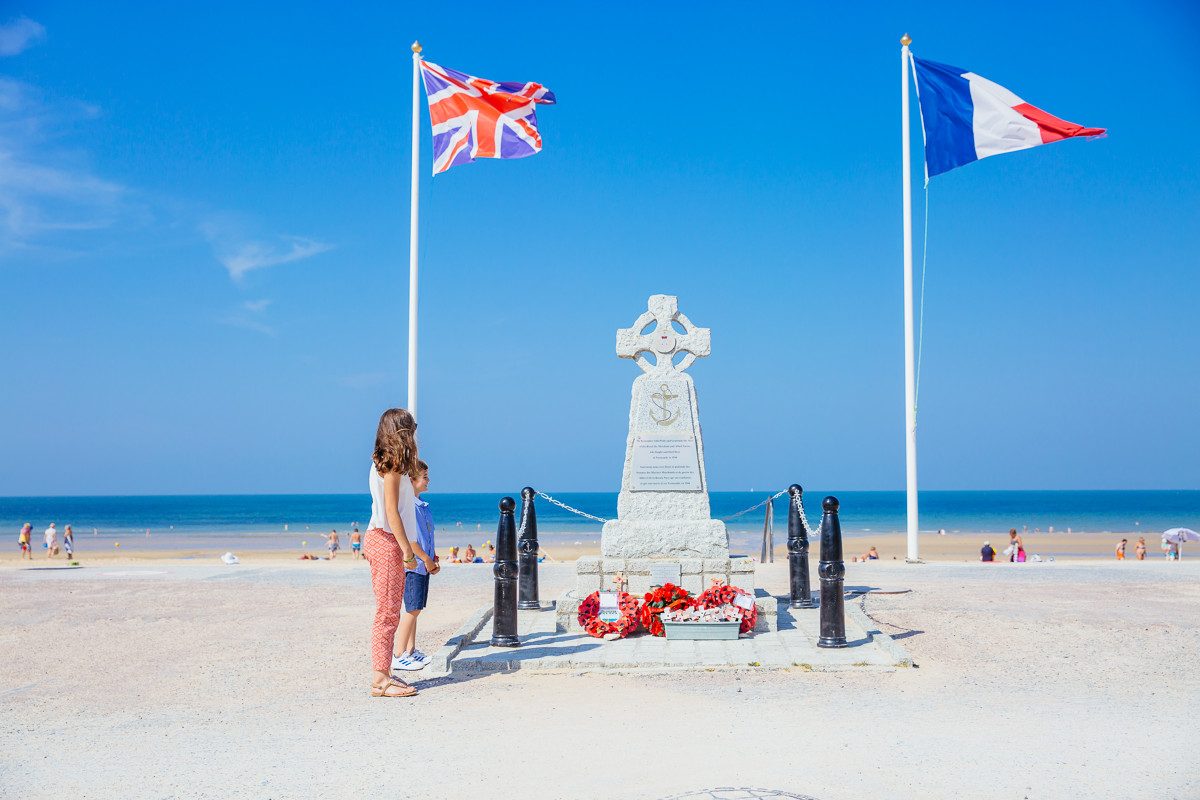
Sword Beach
The eastern landing sector is associated with the British and French commandos and sits closest to the Paris-day-trip rail approach. It is often combined with Pegasus Bridge and other remembrance sites around Ouistreham and Ranville.
Walk the promenade first, then turn inland for memorials.
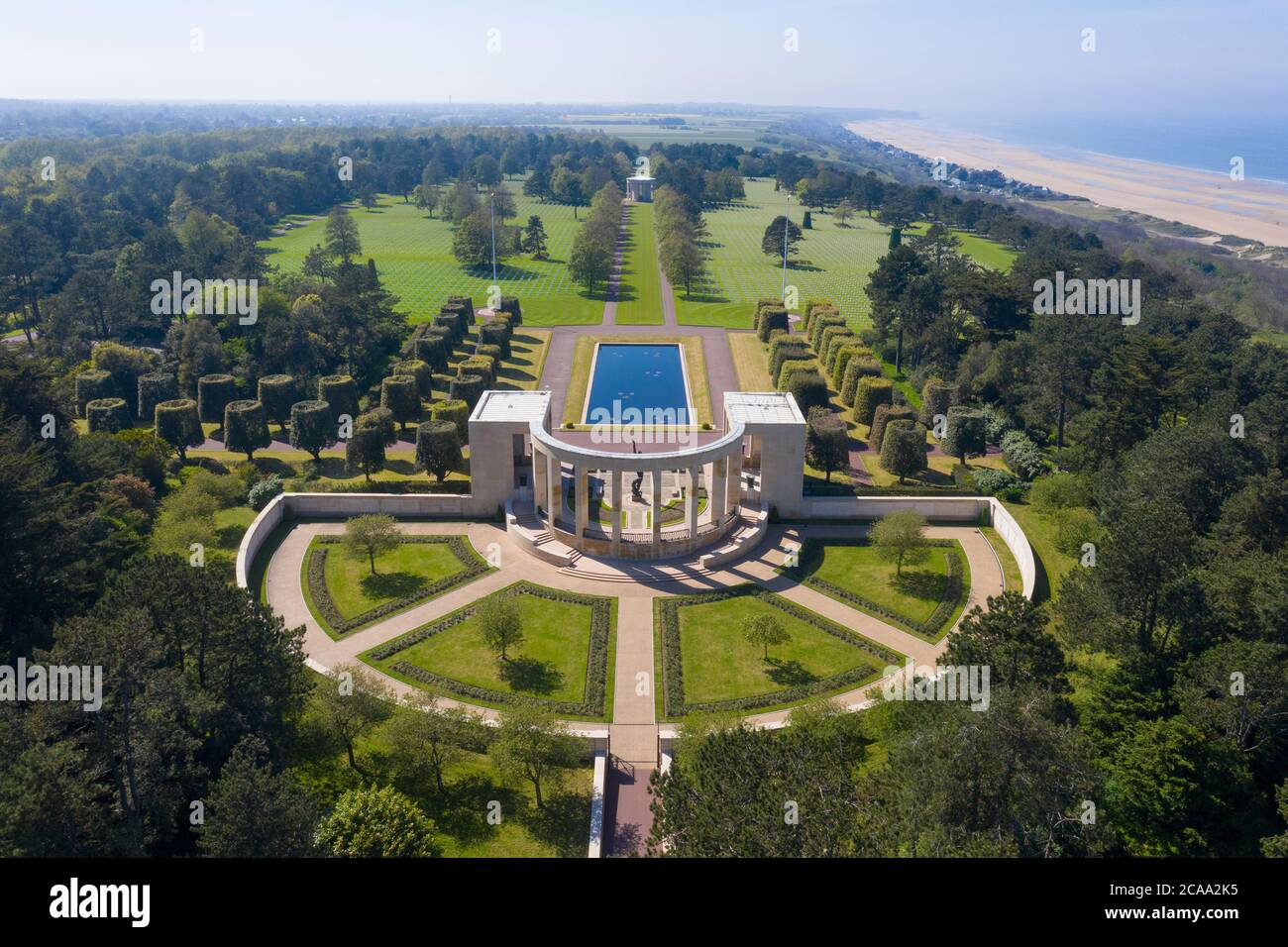
Normandy American Cemetery and Visitor Center
Overlooking Omaha Beach, this major memorial site gathers the graves of 9,387 soldiers and is one of the most solemn stops on the landing-beaches circuit. It gives context to the beach below without needing a long detour.
Pause on the terrace for the full beach view below.
Check availability
Frequently asked questions about normandy day trip from paris by train
Everything you need to know about normandy day trip from paris by train