
Quick answer
Yes. The landing beaches are open around the clock, seven days a week, from 00:00 to 23:59, with free admission to the beaches and outdoor memorials, so a single day works. The practical limit is daylight rather than access: an arrival window of 09:00–17:00 leaves room for the shoreline and the nearby museums, which keep shorter hours of their own.
The sand at Omaha is still faintly rust-coloured in places, and geologists who sampled it found microscopic iron and glass fragments from June 1944 mixed into the grains. That detail says something useful about the whole coast: this is not a monument you walk up to and photograph. It is a stretch of working shoreline, roughly eighty kilometres of it, across Calvados and Manche, where the memorials sit outdoors, unticketed and permanently accessible. So the honest answer to can you do a day trip from paris to normandy is that nothing about the site itself stops you. The gates never close. What limits you is the sun and the road. That changes how the day should be framed. Visitors arriving from the capital tend to picture a single destination, the way they might picture a cathedral or a château. The five landing sectors — Utah, Omaha, Gold, Juno and Sword — are spread across a coastline that takes well over an hour to drive end to end, and the anchor points people name most often, the Normandy American Cemetery above Omaha, the Pointe du Hoc cliffs, the Mulberry harbour caissons still visible off Arromanches, are not neighbours. The outdoor sites and their memorials cost nothing to enter and stay open at all hours; the interpretive museums attached to them do not. Their timetables are the real constraint on the day, which is why a 09:00–17:00 arrival window is the figure worth planning around. It is the block in which the shoreline and the indoor collections overlap. What to do with that answer depends on appetite. A day permits two, perhaps three sectors treated properly, with time to read the panels and stand at the bluff edge. It does not permit all five. Travellers who try to sweep the entire coast in one Normandy D-Day beaches tour usually describe the same outcome: a long day of transit punctuated by short stops. Those weighing a Normandy landing beaches day trip against an overnight should accept the trade openly — depth or breadth, not both. The practical scaffolding for that decision, the transport options, the hour-by-hour sequencing, the sites themselves and the seasonal calendar, is set out in the sections below. Verified opening details for individual museums are published by the regional tourist board at en.normandie-tourisme.fr. Read those before fixing anything; then the question of whether can you do a day trip from paris to normandy stops being theoretical and becomes a matter of which two sectors you choose.
“The gates never close. What limits you is the sun and the road.”
How Can You Do a Day Trip From Paris to Normandy by Train or Car?
The Normandy D-Day Landing Beaches are located along the northern coast of France, approximately 260 kilometers northwest of Paris. The most direct options from the capital are via the Intercités train to Bayeux or Caen, or by driving west.
Intercités from Paris Gare Saint-Lazare to Bayeux
A13 motorway from Paris to the Normandy Coast
Intercités from Paris Gare Saint-Lazare to Caen
A Realistic Timeline: Can You Do a Day Trip From Paris to Normandy?
This plan suits visitors willing to start before dawn and accept a long day: roughly 16 hours door to door from central Paris, with about six hours on the Normandy coast. It works best for those who want Omaha Beach and one or two nearby sites rather than the full 80-kilometre coastline.
Depart Paris Saint-Lazare
Board an early westbound train toward Bayeux or Caen; journey time runs roughly two to two and a half hours. Buy tickets in advance and allow 15 minutes at the station, as the first departures fill with day-trippers.
Arrive on the Normandy coast
This falls inside the recommended arrival window of 09:00–17:00, which allows time to visit the beaches and nearby museums during daylight hours. Collect your rental car, minibus transfer or bicycle at the station before heading north.
Omaha Beach and Colleville
Walk the sand at Omaha Beach, then spend about an hour at the Normandy American Cemetery above it. Admission to the landing beaches and outdoor memorials is free, so no ticket queue applies here.
Pointe du Hoc
Allow 45 minutes to an hour for the cratered clifftop and German casemates. The site is exposed with little shelter, so carry water and a windproof layer even in summer.
Lunch in Vierville or Grandcamp
Stop for a 45-minute meal at a coastal village restaurant. Kitchens in the smaller places often close by 14:00, so do not push this later.
Arromanches and Gold Beach
View the remains of the Mulberry harbour from the cliff terrace, then walk down into the town for around 90 minutes. Parking above the village fills first on weekends.
Return to the station
Budget 40 to 60 minutes back to Bayeux or Caen, plus fuel and drop-off time if driving. Aim to be on the platform 20 minutes before departure.
Evening train to Paris
The late-afternoon and early-evening services return you to Saint-Lazare between 20:00 and 22:00. Check the final departure time that morning, since a missed connection means an unplanned overnight.
Guided Tours vs. DIY: Can You Do a Day Trip From Paris to Normandy?
Visitors must decide between booking an organized group coach tour directly from Paris or managing their own itinerary using France's train system and local Normandy car rentals.
|
Top pick Guided Bus Tours Direct coach from Paris |
Independent DIY Travel Train and car rental | |
|---|---|---|
| Transit Strategy | Direct 3.5-hour coach ride each way from central Paris to the Normandy coast. | 2.2-hour direct train from Gare Saint-Lazare to Bayeux, then self-driving a rental car. |
| Stress Level | Zero navigation; passengers sit back during the 7 hours of total driving. | Self-reliant; driver handles toll roads, parking, and coordinates train timetables. |
| Time on the Ground | Roughly 4.5 hours of dedicated sightseeing time divided among three sites. | Up to 8 hours of sightseeing time depending on the selected return train. |
| Total Cost Estimate | Starts at 130 EUR to 200 EUR per person for transport and guide fees. | From 90 EUR to 170 EUR per person (50 EUR average round-trip train and 70 EUR car rental divided). |
| Flexibility | Fixed group schedule with zero deviation from the pre-planned stops. | Complete control to modify route, skip museums, or extend beach visits. |
Verdict: Choose a guided tour if you prefer hassle-free round-trip transport with live commentary, or opt for DIY travel if you want to maximize time on the ground and set your own pace.
D-Day Landmarks to Prioritize in Normandy
A day trip from Paris requires prioritizing the most significant historical sites along the Calvados coastline. Focusing on these key locations ensures a comprehensive understanding of the D-Day landings within a limited timeframe.
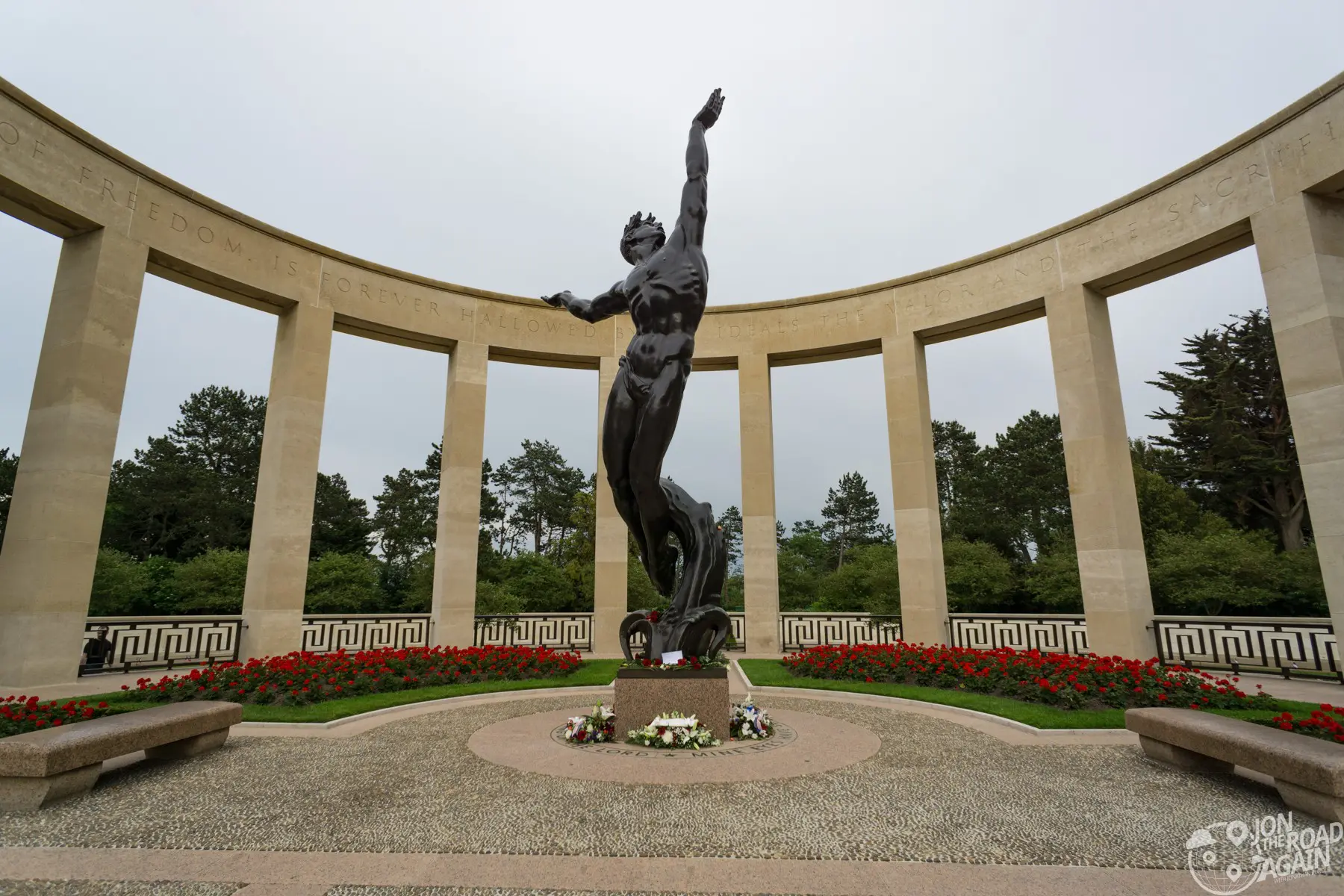
Normandy American Cemetery
Located in Colleville-sur-Mer, this 172.5-acre site contains the graves of 9,389 American soldiers who lost their lives during the invasion. The memorial features a semicircular colonnade, a reflecting pool, and the bronze statue 'Spirit of American Youth Rising from the Waves'.
Walk past the reflecting pool to view the beach orientation table.
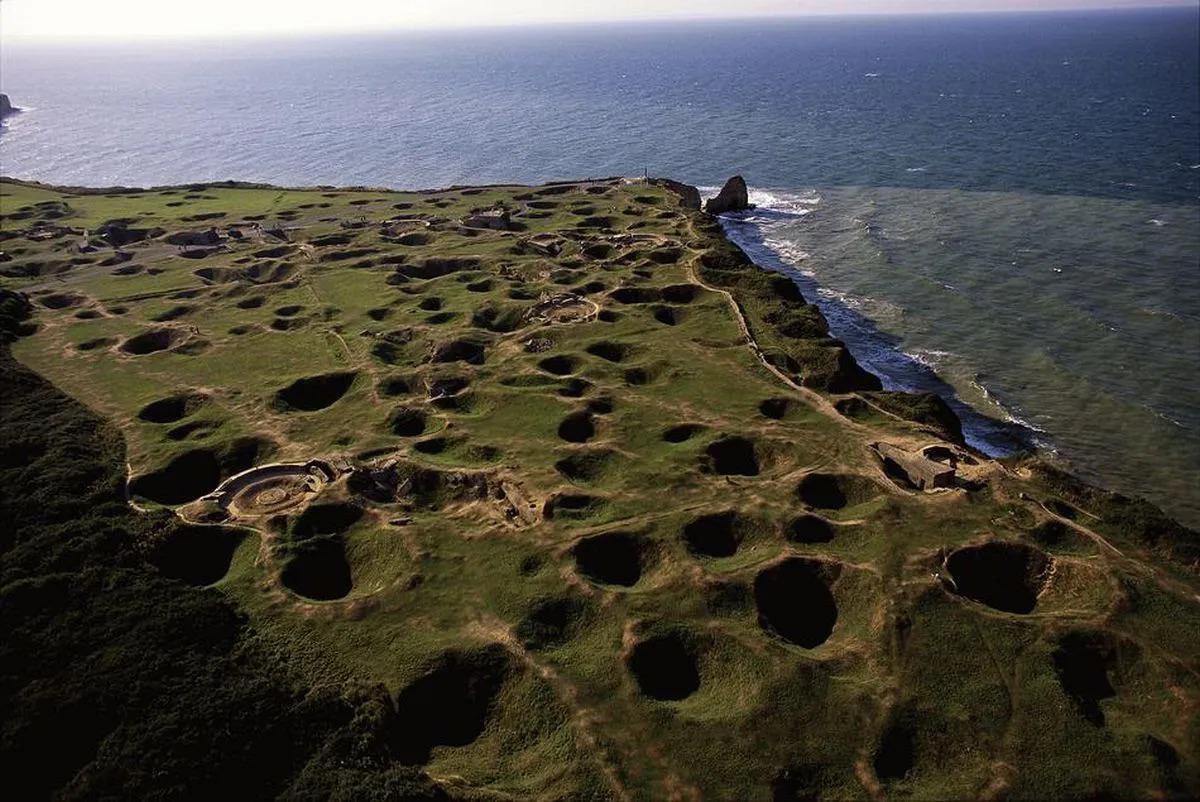
Pointe du Hoc
This prominent 100-foot cliff was scaled by U.S. Army Rangers to dismantle German artillery positions overlooking the landing sectors. The landscape remains heavily cratered from Allied bombardments and contains original German concrete bunkers.
Explore inside the intact concrete observation bunker at the cliff edge.
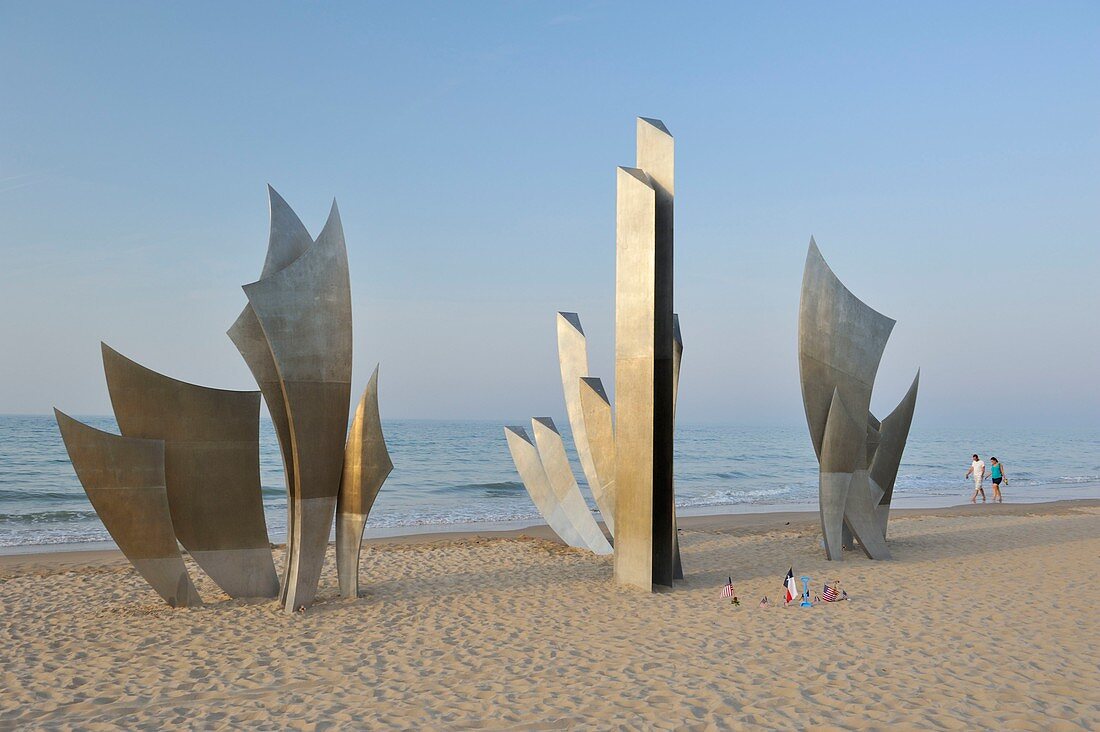
Omaha Beach
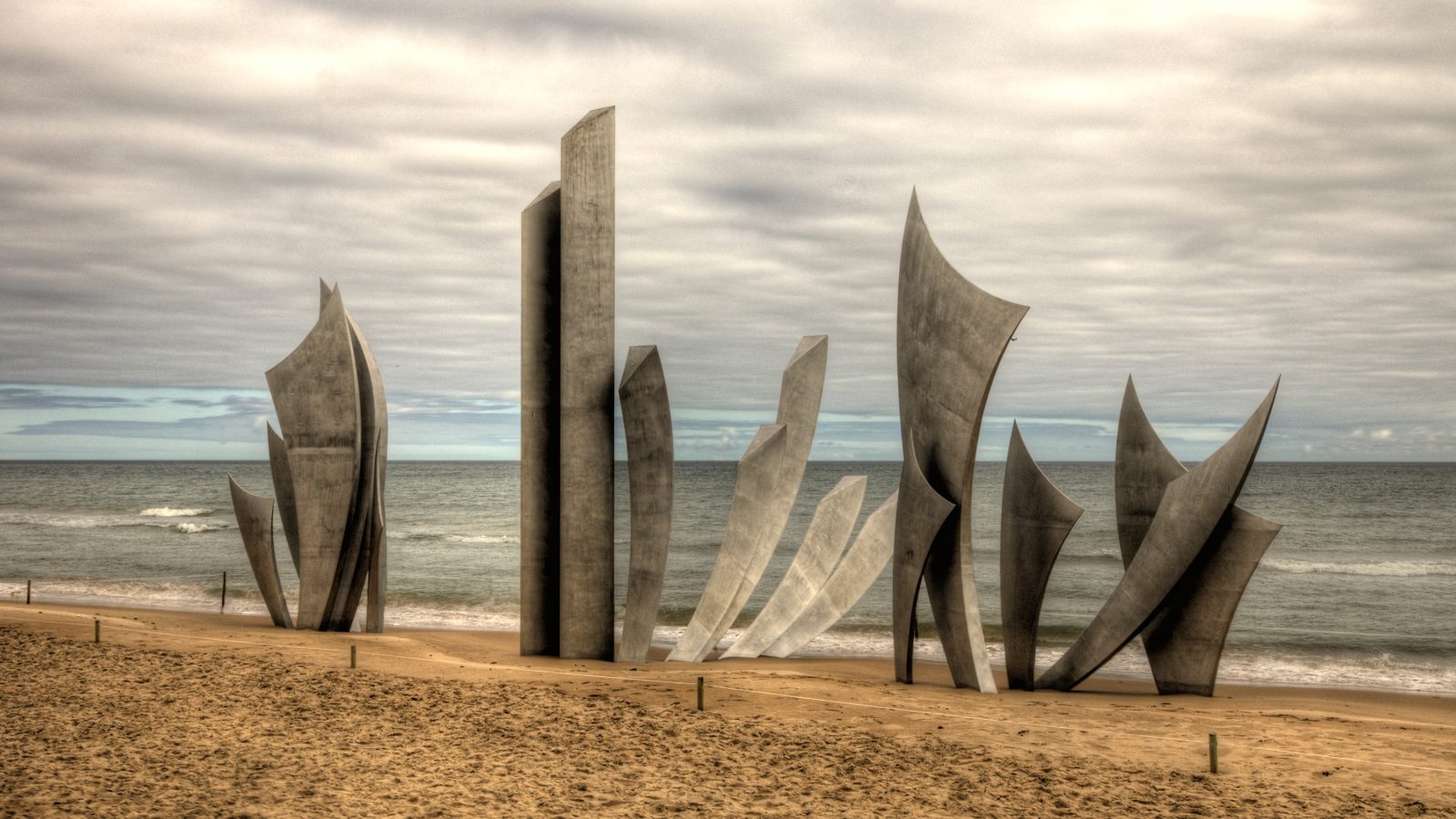
This five-mile stretch of coast saw the heaviest casualties during the initial assault on June 6, 1944. The shore features 'Les Braves', a monumental steel sculpture standing in the sand to honor the landing forces.
Visit during low tide to see the sculpture standing fully dry.
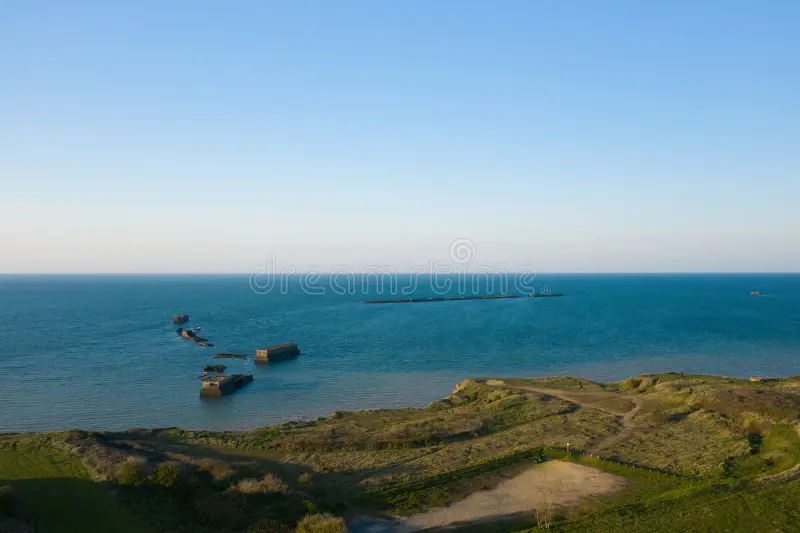
Arromanches Mulberry Harbor
Also known as Port Winston, this artificial port was constructed by the British to unload millions of tons of military supplies. Large concrete caissons still sit in the water and on the sand near the shore.
Walk the eastern cliffs at low tide to view the harbor ruins.
Common Pitfalls: Can You Do a Day Trip From Paris to Normandy Without a Car?
A Paris–Normandy day trip fails on planning details more often than distance. These are the errors that turn a workable day into a rushed one.
Trying to cover all five landing beach sectors
Utah and Sword sit roughly 80 km apart along the coast. Pick one or two adjacent sectors and accept that the rest waits for another trip.
Booking a Bayeux-based local guide the day before
Bayeux guides and small-group drivers meeting the morning train sell out weeks ahead in summer. Reserve as soon as your travel date is fixed.
Miscalculating the last return train from Bayeux or Caen
Check the final Paris-bound departure before you leave and work backwards, building in a 45-minute buffer for coastal traffic back to the station.
Arriving at the coast too late to see anything
Aim to be on site within the 09:00–17:00 arrival window, which allows time to visit the beaches and nearby museums during daylight hours.
Assuming everything on the coast is free to enter
Access to the landing beaches and outdoor memorials is free admission, but individual museums and the American cemetery keep their own separate hours and entry rules.
Skipping confirmation of site closures before travelling
Cross-check details on the official tourism site at https://en.normandie-tourisme.fr/discover/d-day-and-the-battle-of-normandy/dday-landing-beaches/ within a few days of your visit.
Best Time of Year for a Normandy Day Trip
The best window for a day trip from Paris to the D-Day Landing Beaches is from late spring to early autumn, specifically between May and October. This period offers longer daylight hours and more favorable weather for exploring the outdoor coastal memorials.
Spring (April to May)
Moderate crowd levels.Cool with averages of 8°C to 15°C.
A pleasant period to visit before summer crowds arrive. Apple blossoms bloom across the countryside, though you should prepare for occasional rain.
Summer (June to August)
High crowds, peaking around June 6.Warm, average highs around 20°C to 23°C.
The longest daylight hours allow for a fuller sightseeing schedule. However, early June brings heavy traffic and road closures due to the anniversary ceremonies.
Autumn (September to October)
Lower crowd levels.Mild temperatures averaging 10°C to 18°C.
The region quietens down, and parking at the outdoor sites is easier. Days start to shorten, but autumn colors provide a peaceful backdrop.
Winter (November to March)
Very low crowd levels.Cold, wet, wind, averaging 3°C to 9°C.
Daylight is limited, and some local museums operate under reduced hours. Strong coastal winds can make walking along the shoreline challenging.
Verdict: Tuesday to Thursday during May or September, arriving by 09:00 to maximize daylight hours and avoid weekend tour buses.
Cost and Admission for Normandy D-Day Landing Beaches
Visiting the Normandy D-Day Landing Beaches and outdoor memorial sites is entirely free. Overall costs for a day trip depend on transit choices, guide services, and optional museum tickets.
A typical adult pays 0 EUR to access the historic shoreline and cemeteries, with transport and guided tour packages being the primary variables.
Check availability
FAQ: Can you do a day trip from paris to normandy?
Everything you need to know about can you do a day trip from paris to normandy